
The calendar says late August, school supplies are stocked, and you’ve got one last weekend to squeeze every drop of fun out of summer. A backyard water slide party hits that perfect combo: kids stay entertained for hours, parents get to relax with a cold drink, and nobody has to pack the car for a trip to the water park.
This guide walks through the logistics, layout ideas, and real-world considerations for setting up a backyard water slide that actually works. Whether you’re eyeing an inflatable rental, a DIY slip-and-slide, or a combo bounce house with waterslide, you’ll know what fits your yard, your crew, and your budget.
What You’ll Learn
Planning a Big Bash
You’ve got 15+ kids coming, parents staying to hang out, and you want something that keeps the chaos contained and the fun dialed up. You need a setup that handles volume and doesn’t flop after the first hour.
Testing the Water Slide Idea
Your kids have been begging for a backyard water slide all summer. You’re curious, but not sure if your yard can handle it, if it’s worth the cost, or if it’ll just sit there unused after the first weekend.
Last-Minute Summer Send-Off
School starts Monday. You’ve got this weekend and a yard full of restless energy. You want something fun, simple, and memorable—without overcomplicating it or spending a fortune.
Types of Backyard Water Slides
Not all outdoor water slides are created equal. The type you choose depends on how many kids you’re entertaining, how much space you have, and whether you want a one-time event or something you’ll use all season.
Inflatable Water Slides (Rental or Purchase)
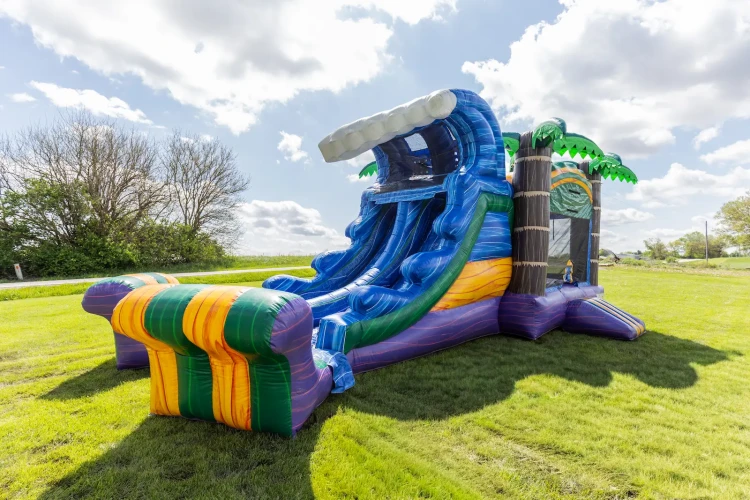
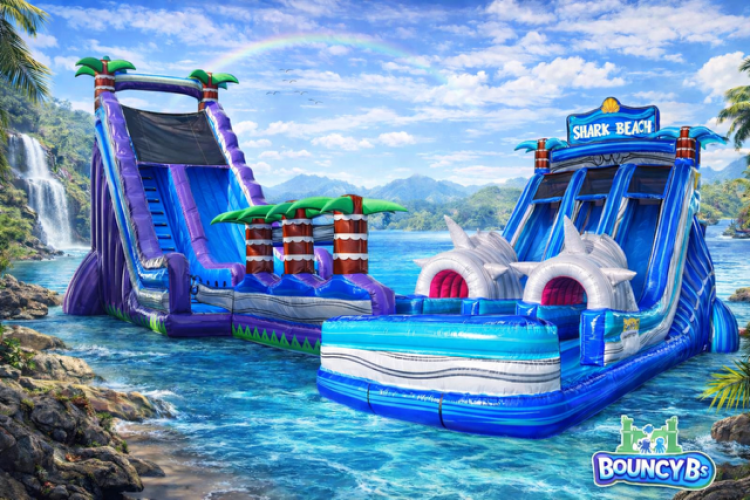
These are the tall, colorful slides you see at neighborhood parties. They require a continuous blower to stay inflated, a hose connection for water flow, and a standard electrical outlet. Most inflatable slides stand 10-15 feet tall and take up 15-25 feet of yard length.
Best for: Big parties with 10+ kids, where the slide becomes the main attraction. Commercial-grade inflatables (like rentals) handle high traffic better than consumer-grade units you buy online.
💡 Pro Tip: If you’re renting, ask about combo units that include both a bounce area and a water slide. Kids rotate between bouncing and sliding, which spreads out the action and prevents bottleneck lines at the slide entrance.
DIY Slip-and-Slide Setups
The classic: a long sheet of plastic, a garden hose, and a slight downhill slope. You can buy pre-made slip-and-slides or DIY with heavy-duty plastic sheeting (6 mil or thicker). Stake the edges down, run a soaker hose along the top edge, and let gravity do the work.
Best for: Smaller groups, older kids who can generate their own momentum, or budget-conscious setups. Works great if your yard has a natural slope.
⚠️ Watch Out: Slip-and-slides work best on grass, not concrete or asphalt. Hard surfaces cause painful friction burns. And never add soap or dish detergent—it creates dangerous over-slickness and damages the plastic.
Bounce House with Waterslide Combos
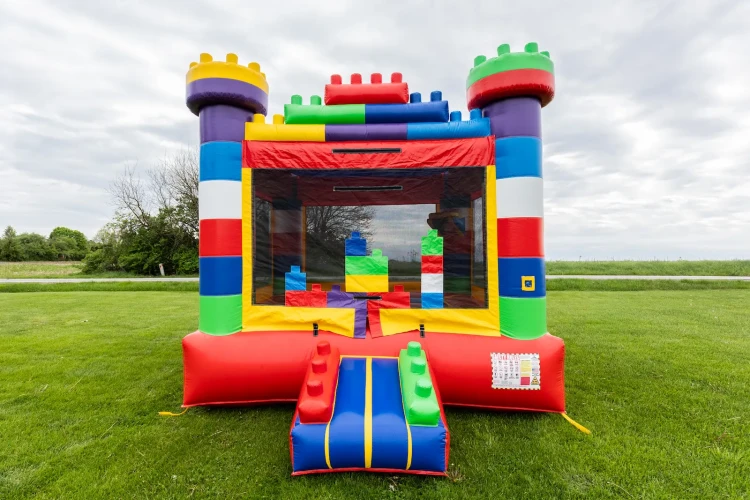
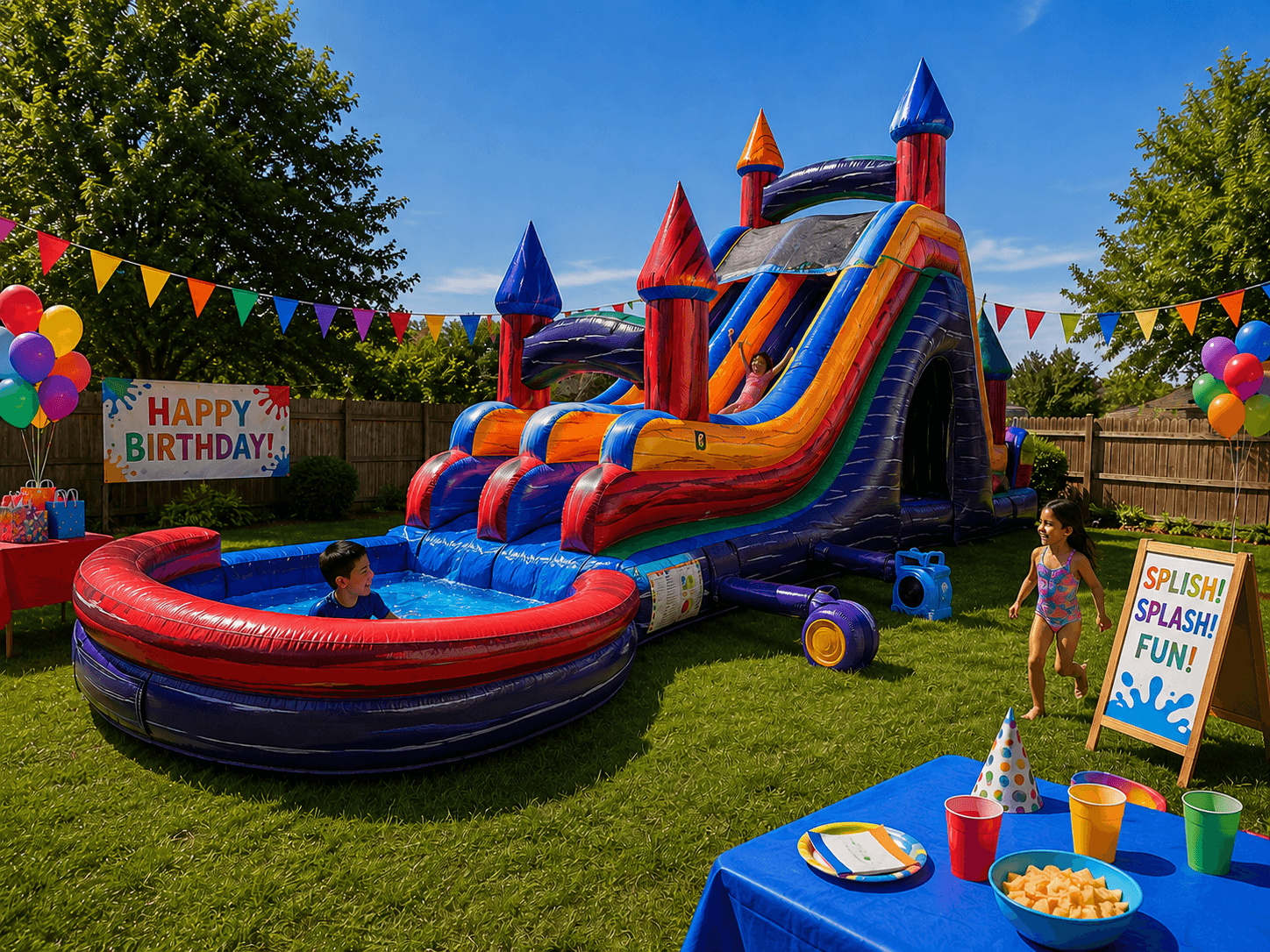
These units combine a bounce house with waterslide features—usually a bounce area, climbing wall, slide, and splash pool all in one inflatable structure. They’re bigger than standalone slides and require more space, but they keep kids engaged longer because there are multiple activity zones.
Best for: Mixed-age groups where younger kids want to bounce and older kids want to slide. The variety prevents boredom and reduces crowding at any one feature.
Yard Size and Setup Requirements
The biggest mistake people make is ordering a slide without measuring their yard first. Here’s what you actually need.
Space Requirements
Minimum footprint: 15-20 feet long × 8-10 feet wide for most inflatable slides.
Clearance space: Add 3 feet on all sides for stakes, blower placement, and kid traffic.
Overhead clearance: Check for low tree branches, power lines, or roof overhangs that could interfere with tall slides.
Ground Surface
Best: Flat, level grass without rocks, sticks, or sprinkler heads.
Acceptable: Slight slope (under 5 degrees) if the slide is positioned to flow with it.
Not recommended: Concrete, asphalt, gravel, or areas with underground sprinkler systems that could be damaged by stakes.
Access and Delivery
If you’re renting, the delivery crew needs to get the rolled-up unit from their truck to your backyard. That usually means a clear path through a gate or side yard at least 3 feet wide.
Check gate width and remove any obstacles (furniture, planters, etc.) along the path before delivery day.
Water Source, Hose, and Power Needs
A backyard water slide party setup isn’t plug-and-play. You need reliable water flow and electricity in the right places.
Water Hose and Pressure
Most water slides connect to a standard garden hose. The water runs continuously to keep the slide surface wet and the splash pool filled. You’ll need:
- A hose long enough to reach from your outdoor spigot to the slide’s water inlet (usually at the top).
- Decent water pressure—at least 40 PSI. Low pressure means weak flow, which makes the slide sticky instead of slippery.
- No kinks or leaks that reduce flow. Older hoses often collapse under pressure or leak at connections.
If your water pressure is weak, running two hoses from separate spigots can help. Some slides have dual inlet points for this reason.
Electrical Power for Blowers
Inflatable slides require a continuous blower to stay inflated. The blower plugs into a standard 110V outlet and must run the entire time the slide is in use. Here’s what you need:
- A dedicated outdoor outlet (GFCI-protected for safety around water).
- Extension cord rated for outdoor use if the outlet is far from the blower. Most rental companies provide this, but confirm in advance.
- No overloading circuits. Don’t plug the blower into the same outlet running multiple other devices (fans, speakers, etc.). Tripped breakers = deflated slide.
💡 Pro Tip: Test your outlet and hose setup the day before your party. Run the hose at full pressure for 10 minutes to check for leaks, and make sure the outlet can handle the blower load without tripping. Last-minute electrical or plumbing issues kill party momentum fast.
Safety Considerations for Kids Water Slides
Water + height + excited kids = a recipe for chaos if you don’t set a few ground rules. Most injuries happen from collisions (kids sliding into each other) or falls off the sides. Here’s how to keep things safe without killing the fun.
🚩 Red Flags: Never Allow These
- Sliding headfirst (always feet-first or sitting)
- More than one kid on the slide at a time
- Running or roughhousing at the top platform
- Climbing up the slide surface (use the ladder only)
- Using the slide when the blower isn’t running (deflation risk)
✓ Smart Safety Moves
- Post one adult as “slide monitor” to enforce rules
- Wait until the previous slider has cleared the splash zone before the next kid goes
- Check weight limits and separate age groups if needed
- Anchor the slide properly—stakes should be deep and secure
- Keep the landing zone clear of toys, coolers, and other obstacles
Age and Weight Guidelines
Most residential kids water slide units are designed for ages 5-12 and have a weight limit of 100-150 pounds per slider. Commercial-grade rentals often support up to 200-250 pounds and can handle teens or adults. Always check the manufacturer’s rating—exceeding it causes deflation, material stress, and safety hazards.
If you’ve got a wide age range, consider a combo unit with multiple activity zones so younger kids aren’t intimidated by a tall slide, and older kids aren’t bored with a basic setup.
Water Slide Party Logistics: Timing, Supervision, and Flow
You can have the coolest slide in the neighborhood, but if the party logistics fall apart, kids get bored, parents get stressed, and the whole thing feels chaotic. Here’s how to structure a smooth water slide party setup.
Best Time of Day
Peak sliding hours: 12pm-4pm when the sun is strong and kids are ready to cool off. Morning parties (before 11am) mean colder water and less enthusiasm. Evening parties (after 5pm) lose sunlight and warmth fast, especially in late August.
Plan for 2-3 hours of active slide time. Most kids stay engaged for 90 minutes on the slide, then shift to other activities (snacks, games, pool, etc.). If you’re doing a 3-4 hour party, have a backup activity ready so the slide isn’t the only entertainment.
Supervision Strategy
Assign one adult to “slide monitor” duty in rotating 30-45 minute shifts. Their job: enforce the one-at-a-time rule, watch for unsafe behavior, and manage the line. This prevents the chaos that happens when 10 kids all try to climb up at once or when bigger kids start dominating the slide.
If parents are staying, recruit them into the rotation. Most are happy to help if you make it clear that supervision is shared, not all on you.
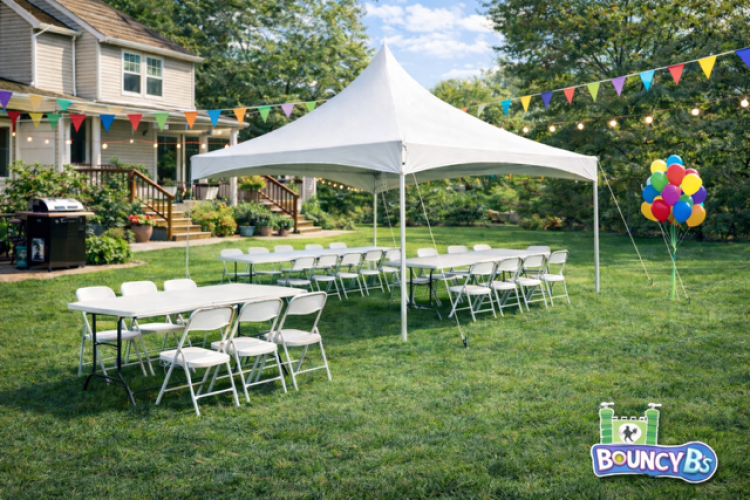
💡 Pro Tip: Set up a “dry zone” with towels, snacks, and seating away from the slide. Kids naturally rotate between wet and dry activities, which prevents overcrowding at the slide and gives everyone a break.
Managing the Line
Long lines kill the fun. Here’s how to keep flow moving:
- “Go” signal system: The monitor watches the splash zone and gives a clear “go” signal when the previous slider has cleared.
- Timed turns during peak crowd: If the line gets long, institute 5-minute rotation limits so everyone gets multiple turns.
- Distraction stations: Set up cornhole, water balloons, or a kiddie pool nearby so kids waiting in line aren’t just standing around.
For more ideas on structuring a kids party with multiple activity stations, check out this guide on how to organize a kids birthday party that keeps everyone engaged.
Wet vs. Dry Slides: What’s the Difference?
Not all inflatable slides are designed to get wet. Some are “dry slides” intended for indoor or outdoor use without water. Others are specifically engineered as water slides with splash pools, drainage systems, and water-resistant materials. Using a dry slide with water (or vice versa) creates safety and durability issues.
Water Slides
- Built with sealed seams and waterproof materials
- Include a splash pool or landing zone with drainage
- Designed for continuous water flow to keep the sliding surface slick
- Heavier and more durable to handle wet/heavy use
Dry Slides
- Smooth vinyl surface that lets kids slide without water
- Often steeper angle for gravity-driven speed
- Lighter materials not designed for prolonged water exposure
- Can be used indoors or in cooler weather
Why it matters: Adding water to a dry slide makes it dangerously slippery with no splash pool to slow kids down. Using a water slide without water creates friction burns and ruins the material. Always confirm with your rental company which type you’re getting and how it’s meant to be used.
Matching the Right Slide to Your Party
Choosing the right backyard water slide isn’t about picking the biggest or flashiest option. It’s about matching the slide to your space, your crowd, and your goal for the party.
15+ Kids | 3-4 Hours
Best choice: Commercial-grade inflatable slide or combo unit (bounce + slide)
Why: High traffic demands durable materials. Multiple activity zones prevent bottlenecks and boredom. Rental companies handle setup, takedown, and equipment quality.
6-12 Kids | 2-3 Hours
Best choice: Standard inflatable water slide (rental or quality consumer-grade purchase)
Why: Right-sized for the group without overwhelming your yard. One slide keeps things simple. Moderate traffic won’t overwork the equipment.
2-5 Kids | 1-2 Hours
Best choice: DIY slip-and-slide or small inflatable
Why: Budget-friendly. Quick setup and teardown. Perfectly scaled for a low-key afternoon without the rental commitment or large footprint.
For a full breakdown of different water slide options and what to expect from each, explore this water slide rentals guide that covers sizing, features, and selection tips.
Adding More to the Party
A water slide is a great centerpiece, but pairing it with complementary activities creates a party that holds attention longer and accommodates different kid personalities. Some kids are all-in on the slide. Others want variety.
Obstacle Courses
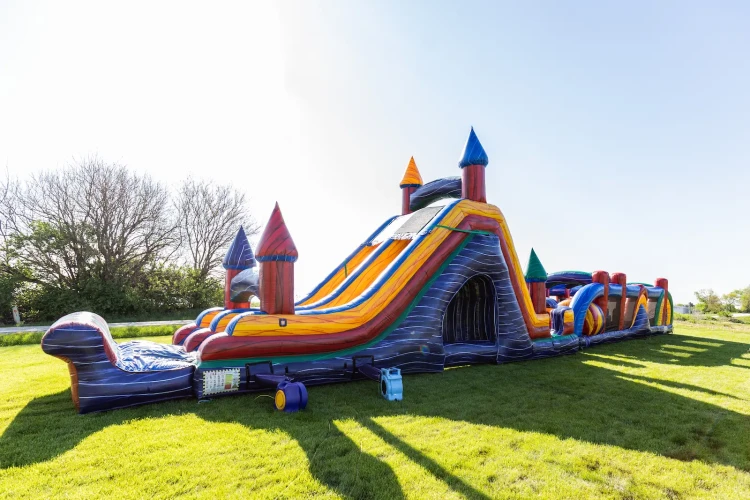
If you’ve got space and budget, adding an obstacle course creates a second high-energy zone. Kids rotate between the slide (wet, cooling) and the course (dry, competitive). This setup works especially well for mixed-age groups where younger kids might be intimidated by a tall slide but love crawling through tunnels and climbing walls.
Bounce Houses
Combo units that include both bouncing and sliding are popular for a reason—they give kids options without requiring two separate rentals. For tips on choosing and using bounce houses effectively, this bounce house rental guide covers the basics.
Themed Add-Ons
Late summer = back-to-school vibes, but you can still lean into seasonal themes. If you’re planning around a holiday weekend, check out these Fourth of July party ideas for kids that adapt well to any summer celebration with slight tweaks (swap red/white/blue for different colors, adjust decorations, keep the activity structure).
Frequently Asked Questions
What size backyard do I need for a water slide? +
Most residential backyard water slides need at least 15-20 feet of length and 8-10 feet of width. The slide itself typically takes up 12-18 feet, but you’ll also need clearance space at the top for climbing and at the bottom for the splash landing zone. If your yard is smaller, compact or vertical slides with shorter footprints are available.
Do backyard water slides need electricity? +
Inflatable water slides require a continuous blower that plugs into a standard 110V outlet. The blower must run the entire time the slide is in use to keep it inflated. You’ll need an outdoor-rated extension cord if your setup is far from an outlet. Non-inflatable slides (like slip-and-slides) don’t need power, just a hose connection.
How much water does a backyard water slide use? +
A standard inflatable water slide uses approximately 15-30 gallons per minute while running. Most slides need water running continuously to keep the sliding surface wet and the splash pool filled. Plan for 200-400 gallons total for a 3-4 hour party. Using a recirculating pump can reduce water consumption by up to 70%.
Can adults use backyard water slides? +
It depends on the slide’s weight rating. Most residential water slides are rated for kids up to 100-150 pounds. Commercial-grade slides designed for all ages can handle 200-250 pounds per user. Always check the manufacturer’s weight limit and user capacity. Using a slide beyond its rating can cause deflation, tearing, or safety issues.
How do you keep a backyard water slide from getting too slippery? +
Use only water—never soap, detergent, or oils, which create dangerous over-slickness and can damage the material. Most slides are designed to be slippery enough with just water flow. If the slide feels sticky, increase water pressure slightly. For inflatable slides, ensure the blower is creating proper firmness so the surface tension works correctly.
What’s the best way to dry and store a water slide after use? +
After deflating, lay the slide flat in the sun for 30-60 minutes to air dry completely. Wipe down wet spots with towels. Never store a damp slide—mold and mildew develop quickly. Once fully dry, fold it loosely and store in a cool, dry place away from rodents and sharp objects. Proper drying extends the slide’s lifespan significantly.
Making It Happen
A backyard water slide party doesn’t have to be complicated. Measure your yard, check your water pressure and power access, pick a slide that fits your group size, and set some basic safety rules. The rest takes care of itself once kids see water and a slide.
The end of summer goes fast. One good party with friends, sunshine, and a water slide becomes the memory that carries into the school year. If you’re ready to make it happen, start with the basics: yard space, supervision plan, and the right equipment for your crew.
For more ideas and options, browse the full lineup of water slides and see what fits your space and style.
Planning Your End-of-Summer Party?
We’ve helped hundreds of families throw unforgettable backyard parties. No pressure, no pitch—just real answers about what works for your space and your crew.
Contact UsCall anytime: (219) 688-9594