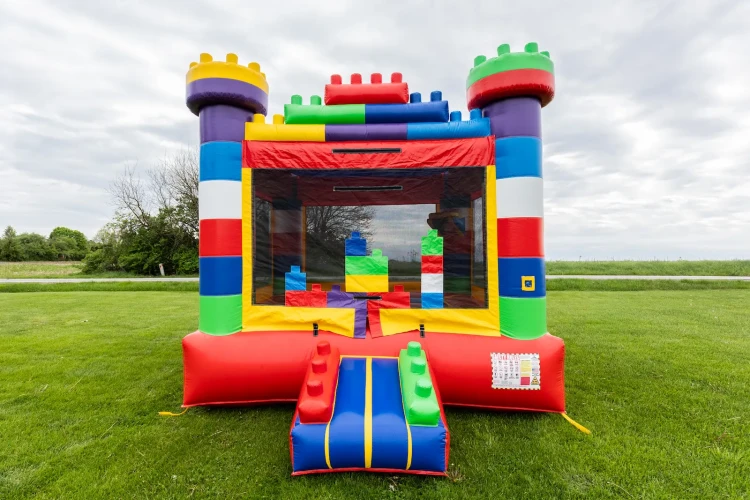


You’ve decided on inflatables for your kid’s party, but now you’re staring at photos of bounce houses and bounce house combos wondering which one actually makes sense for your space, your budget, and your crew of wild children. A regular bounce house offers maximum jumping room in a compact footprint, while a bounce house with slide adds vertical play and an exit feature but requires more space and costs a bit more.
This guide breaks down the real differences between these two popular rental options so you can choose the one that fits your backyard setup, age range, and party vibe. No fluff, no sales pitch—just the practical details that matter when you’re planning a backyard event.
What’s in This Guide
- ✓ Which Type of Party Guest Are You?
- ✓ What’s the Real Difference Between a Bounce House and a Combo?
- ✓ How Much Space Do You Actually Need?
- ✓ Which Works Better for Different Age Groups?
- ✓ Cost Comparison: Regular vs. Combo
- ✓ Supervision and Safety Considerations
- ✓ Wet/Dry Combos vs. Dry-Only Units
- ✓ Frequently Asked Questions
Which Type of Party Planner Are You?
Before diving into specs and logistics, figure out which scenario matches your situation. Your space, guest list, and party goals determine which option makes the most sense.
The Compact Yard Parent
You have a smaller backyard or need to fit the inflatable near a deck, fence line, or garden bed. Space efficiency is your top priority.
Best fit: Regular bounce house (13×13 footprint with maximum jump space).
The Mixed-Age Host
You’re hosting toddlers through tweens and need an inflatable that keeps everyone entertained without the little ones getting trampled. Variety and flow matter more than raw bounce space.
Best fit: Bounce house with slide (gives older kids the slide challenge while younger ones can bounce safely).
The “Keep Them Busy” Planner
You’ve got older elementary kids who get bored quickly and need multiple activity stations. Engagement time is your metric for success.
Best fit: Combo with slide or even an obstacle course setup (more challenge, longer attention span).
What’s the Real Difference Between a Bounce House and a Combo?
A traditional bounce house is a single enclosed chamber designed purely for jumping. Four mesh walls, one entry point, and maximum interior space for bouncing. Think of it as a padded trampoline room with walls.
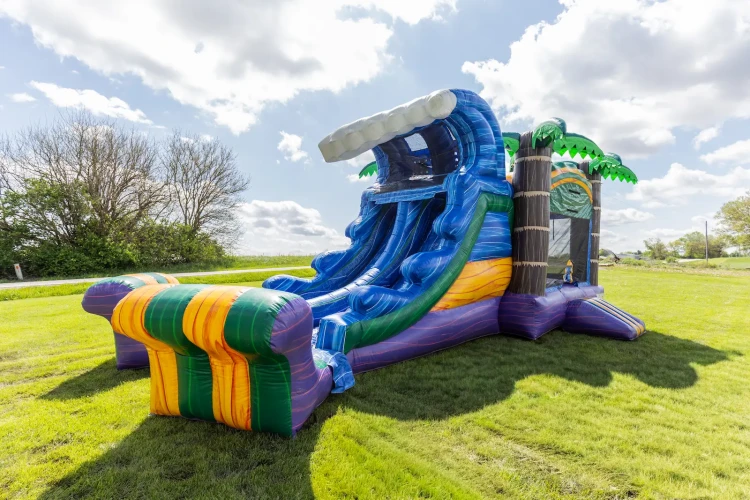
A bounce house with slide (combo unit) splits the footprint into two zones: a bounce chamber and an attached slide that serves as both play feature and exit route. The bounce area is typically 20-30% smaller than a comparably sized regular bounce house because the slide takes up real estate.
Regular Bounce House
- ✓ 13×13 to 15×15 footprint
- ✓ Maximum jumping space (entire interior is bounce area)
- ✓ Single entry/exit point
- ✓ Lower profile (usually 10-12 feet tall)
- ✓ Easier supervision (one zone to watch)
- ✓ Best for: Younger kids (3-7), tight spaces, pure bouncing
Bounce House with Slide
- ✓ 15×18 to 20×25 footprint
- ✓ Dual play zones (bounce area + slide)
- ✓ Slide exit or climb-and-slide feature
- ✓ Taller profile (usually 12-15 feet with slide)
- ✓ Requires multi-zone supervision
- ✓ Best for: Older kids (6-12), mixed ages, longer engagement time

Pro tip: If you’ve never rented an inflatable before, visualize the setup in your yard using stakes and string before booking. A combo unit that looks perfect online might feel massive when you see the actual footprint marked out in your space.
How Much Space Do You Actually Need for Each Type?
The inflatable’s listed dimensions are not the total space requirement. You need clearance around the unit for stakes, blower placement, and safe exit zones. Here’s the real math:
Regular Bounce House Space Planning
Unit footprint: 13×13 feet (typical) Stake radius: Add 3 feet on all sides for ground stakes Blower clearance: 5-6 feet from one side Total recommended space: 19×19 feet minimum
Overhead clearance requirements:
- At least 3 feet clearance from tree branches, power lines, or roof overhangs
- Standard bounce house height: 10-12 feet inflated
- Combo units with slides: 12-15 feet inflated
Combo Unit Space Planning
Unit footprint: 15×18 feet (typical small combo) Stake radius: Add 3 feet on all sides Blower clearance: 5-6 feet from one side Slide exit zone: 4-5 feet of cushioned landing space Total recommended space: 21×27 feet minimum
↓ What Keeps Setup Simple
- Flat, level grass or turf surface
- No overhead obstructions within 15 feet
- Access to 110V outlet within 50 feet
- Clear path for delivery (36-inch minimum gate width)
- Open sight lines for adult supervision
↑ What Complicates Setup
- Sloped yards (more than 5-degree grade)
- Hard surfaces requiring sandbag anchoring
- Narrow side yards or tight gate access
- Trees or structures blocking setup zones
- No nearby power source (requires generator rental)
Most rental companies will ask for photos or measurements before confirming your reservation. Providing accurate space details upfront prevents day-of surprises when the delivery crew shows up and realizes the unit won’t fit. For more guidance on evaluating your setup area, see our complete bounce house rental guide.

Which Works Better for Different Age Groups?
Age range makes a huge difference in which inflatable style delivers better play value. A 4-year-old and a 10-year-old have completely different physical capabilities and entertainment thresholds.
Toddlers and Preschoolers (Ages 2-5)
Best option: Regular bounce house.
Little kids lack the coordination and strength for climbing slide ladders safely. They’re happy with pure bouncing and don’t need variety to stay engaged. A regular bounce house gives them maximum safe play area without the added risk of slide navigation.
Safety note: Younger children in combo units often try to climb UP the slide from the bottom, creating collision risks with kids coming down. A bounce-only unit eliminates this traffic pattern entirely.
Early Elementary (Ages 5-7)
Either option works—depends on energy level and guest list size.
This is the crossover age range. If you’re hosting 8-10 kids in this bracket, a regular bounce house might feel crowded after 20 minutes. A combo unit gives them an alternate activity (sliding) when the bounce chamber gets packed. If it’s a smaller party (5-6 kids), a regular bounce house provides plenty of space and simplicity.
Older Elementary and Tweens (Ages 7-12)
Best option: Combo with slide or obstacle course.
Older kids get bored with pure bouncing quickly. They want challenge, competition, and variety. A slide adds an element of speed and individual achievement (who can go down the fastest, funniest, most creative). Many older kids use the slide as the primary feature and bounce only as a rest zone.
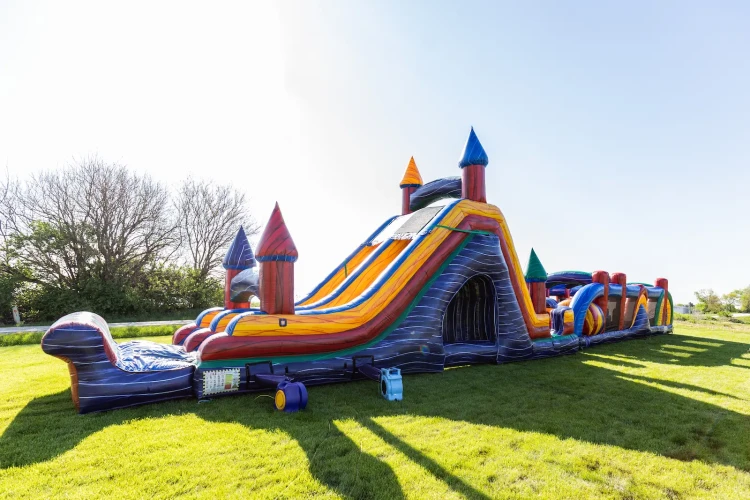
For this age group, consider stepping up to a larger combo or even an obstacle course rental if space allows. The physical challenge keeps them engaged significantly longer than a standard bounce house.

Mixed-Age Parties (Siblings, Cousins, Neighborhood Crew)
Best option: Combo with slide.
When you’ve got a 4-year-old, an 8-year-old, and a 12-year-old all playing together, a combo unit naturally separates activities by skill level. Younger kids tend to stay in the bounce area while older kids dominate the slide. This self-sorting reduces trampling incidents and keeps everyone happier longer.
Supervision tip: Establish a rule that only 2-3 kids can be on the slide ladder at once, and no one climbs up from the bottom. Post an adult near the slide exit to enforce this consistently.
Bounce House vs Combo Cost Comparison
Rental pricing reflects the size, complexity, and replacement cost of the unit. Combo units cost more because they’re physically larger, require more material, and have higher insurance and replacement costs if damaged.
Regular Bounce House
- ✓ 13×13 to 15×15 footprint
- ✓ Single bounce chamber
- ✓ Basic setup and takedown
- ✓ Lower replacement cost
- ✓ Best value for younger kids
Bounce House with Slide
- ✓ 15×18 to 20×25 footprint
- ✓ Bounce area + slide feature
- ✓ More complex setup
- ✓ Higher replacement cost
- ✓ Better for mixed ages/older kids
Wet/Dry Combo or Large Obstacle
- ✓ 20×30+ footprint
- ✓ Water-compatible materials
- ✓ Multiple play zones
- ✓ Highest engagement time
- ✓ Best for older kids/larger groups
Price factors that vary by location and season:
- Peak season premiums: Expect 20-30% higher rates in May-August, especially weekends
- Delivery fees: Usually $25-75 depending on distance from rental location
- Setup surface: Hard surface setups (requiring sandbags) often add $25-50
- Extended rental times: Overnight or multi-day rentals typically cost 1.5x-2x standard rates
- Add-ons: Generator rental ($75-125), attendant service ($100-200), damage waiver ($25-50)
Budget tip: If you’re torn between a small combo and a large regular bounce house at similar price points, the regular bounce house usually delivers better value for pure play time—especially if your guest list is all within a narrow age range.
_1778202222_big.webp)
Supervision and Safety Considerations
Both types of inflatables are safe when used correctly, but they require different supervision strategies. The more zones an inflatable has, the more vigilant adults need to be.
Regular Bounce House Supervision
Single-zone monitoring: One adult can effectively watch the entire unit from any angle. You’re monitoring for overcrowding, rough play, and kids removing shoes or bringing in objects.
Primary safety concerns:
- Size/age mismatches (big kid trampling toddlers)
- Overcrowding (more than 6-8 kids depending on size)
- Flips and acrobatics near walls
- Entry/exit collisions when kids rush in and out
Combo Unit Supervision
Multi-zone monitoring: You need sight lines to both the bounce area and the slide exit. Position yourself where you can see the slide ladder and landing zone simultaneously. Many parents station one adult near the slide and another managing entry/exit traffic.
Primary safety concerns:
- Kids climbing up the slide from the bottom (collision risk)
- Multiple kids on the slide ladder creating a traffic jam
- Landing zone not staying clear (kids sitting at the bottom of the slide)
- Younger kids attempting climbs beyond their skill level
- Slide racing or pushing behaviors
Non-negotiable safety rules (enforce these strictly for any inflatable):
- No shoes, glasses, jewelry, or hard objects inside
- No food, drinks, or gum (choking hazard during bouncing)
- No flips, wrestling, or roughhousing
- Separate play by size/age if there’s a big mismatch (rotate groups every 15-20 minutes)
- Deflate and evacuate immediately if wind gusts exceed 20 mph
Rental companies should provide printed safety guidelines with every delivery. Read them before the party starts and designate one adult as the “bounce monitor” who enforces rules consistently. Kids will push boundaries—having one adult clearly in charge prevents the rules from eroding over the course of the event.
Wet/Dry Combos vs. Dry-Only Units: What’s the Difference?
This is a critical distinction that many first-time renters overlook. Not all combo units can handle water. Using water on a dry-only unit voids insurance coverage and can cause permanent damage to materials and stitching.
Dry Combo Units
Material: Standard 18-oz vinyl with sewn seams Slide surface: Textured vinyl for traction Water use: Absolutely not allowed Best for: Indoor events, cooler weather, any non-water party
A dry combo slide is designed for controlled descent speed. Adding water creates uncontrolled velocity and impact at the bottom. Rental contracts explicitly prohibit water use on dry units, and damage fees can run $500-2000 for material replacement.
Wet/Dry Combo Units
Material: Marine-grade 22-oz vinyl with heat-sealed seams Slide surface: Smooth vinyl designed for water flow Water features: Hose attachment points, drain holes, splash pool at bottom Water use: Fully supported (often required for optimal slide function) Best for: Summer parties, hot weather, water-themed events
Wet/dry units are built to handle moisture and drainage. The slide needs water to function properly—without it, friction can cause burns on bare legs. These units cost 20-40% more than comparable dry combos due to upgraded materials and engineering.

Important distinction: “Wet/dry” means the unit CAN be used dry OR wet. It doesn’t mean you can switch mid-party. Most rental companies require you to choose wet or dry use at booking, as setup differs (water hookups, drainage positioning, ground protection).
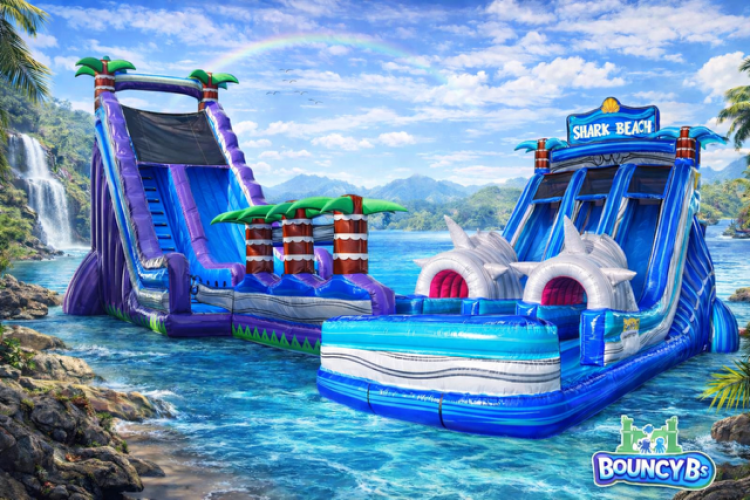
For hot summer parties, upgrading to a wet/dry combo or dedicated water slide rental keeps kids cooler and more engaged. Just confirm you have an outdoor water source within hose reach of the setup location.
Making the Final Decision: Space, Age, and Budget
After evaluating the differences, your decision comes down to three practical factors working together. There’s no universally “better” option—just the right match for your specific party context.
Choose a Regular Bounce House If:
- ✓ Your setup space is under 20×20 feet
- ✓ All guests are ages 2-6
- ✓ You want maximum bounce area
- ✓ Budget is tight ($150-200 range)
- ✓ Simpler supervision is important
- ✓ Party duration is 2-3 hours
Choose a Combo with Slide If:
- ✓ You have 25×30+ feet of space
- ✓ Guest ages range from 5-12
- ✓ You want longer engagement time
- ✓ Budget allows $200-275
- ✓ You have 2+ supervising adults
- ✓ Party duration is 4+ hours
Still unsure which option fits your specific backyard and guest list? Browse the full range of bounce house rental options to see dimensions, capacity, and features side-by-side. Most rental sites include detailed specs and setup requirements for each unit, making it easier to visualize which one works in your actual space.
Frequently Asked Questions
What is the main difference between a bounce house and a bounce house with slide? +
A traditional bounce house is a single enclosed jumping area, while a bounce house with slide (also called a combo unit) includes both a jumping area and an attached slide exit. Combos typically have a slightly smaller bounce area but add vertical play and a thrilling exit route. The slide can be an internal climb-and-slide feature or an external attachment depending on the design.
Which is better for older kids: regular bounce house or combo with slide? +
Older kids (ages 7-12) usually prefer combo units with slides because they offer more varied play, physical challenge, and accommodate different energy levels. The slide adds an element of competition and keeps older children engaged longer than bounce-only units. Many older kids use the slide as the primary feature and treat the bounce area as a rest zone between slide runs.
Do bounce houses with slides take up more space than regular bounce houses? +
Yes, combo units typically require 20-30% more length due to the slide extension. A standard bounce house might be 13×13 feet, while a combo could be 15×18 or larger. Always measure your setup area and account for 3-5 feet of clearance on all sides for stakes, blower placement, and safe exit zones. Total space requirements for combos are usually 21×27 feet minimum versus 19×19 for regular bounce houses.
Can you use a bounce house with slide when it’s wet? +
Only if it’s designed as a wet/dry combo unit. Wet/dry combos have waterproof materials, heat-sealed seams, and drainage systems specifically engineered for water use. Standard dry combos should never be used with water as it damages materials, voids insurance coverage, and creates safety hazards. Always confirm with your rental provider which type you’re receiving and whether water use is permitted.
Are bounce house combos harder to supervise than regular bounce houses? +
Combos require slightly more vigilant supervision because kids move between the bounce area and slide. Adults should position themselves where they can see both zones, monitor slide exit traffic, and ensure kids aren’t climbing up the slide from the bottom. Many hosts station one adult near the slide exit and another managing entry traffic. Regular bounce houses have a single zone that one adult can monitor effectively from any angle.
How much does it cost to rent a bounce house with slide compared to a regular bounce house? +
Combo units typically cost $50-100 more than standard bounce houses due to larger size, added features, and higher replacement costs. Expect regular bounce houses to start around $150-200 for a 4-6 hour rental, while combos start around $200-275. Wet/dry combos and large obstacle-style units run $275-450 depending on size and features. Prices vary by season, location, and rental company.
Ready to Choose the Right Inflatable for Your Party?
Whether you need a compact bounce house or a combo with slide, understanding the real differences helps you pick the option that fits your space, your guest list, and your party goals. No pressure, no pitch—just the details that matter when planning a backyard event.
Contact UsQuestions about setup, space requirements, or which unit works best for your specific situation? We’re here to help you figure it out.