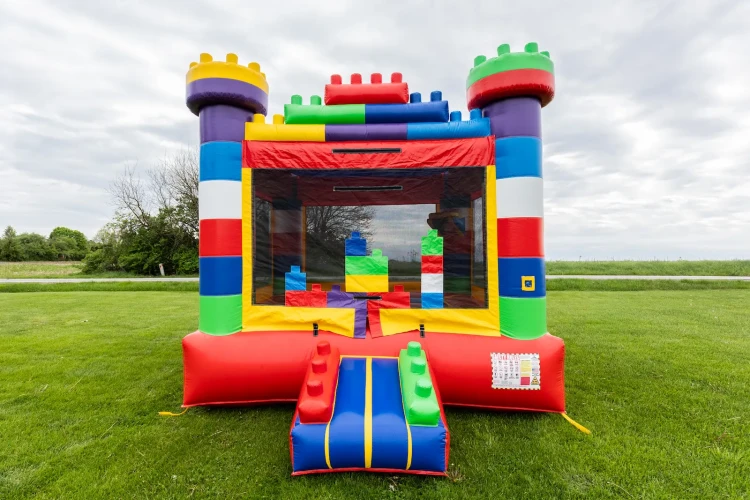

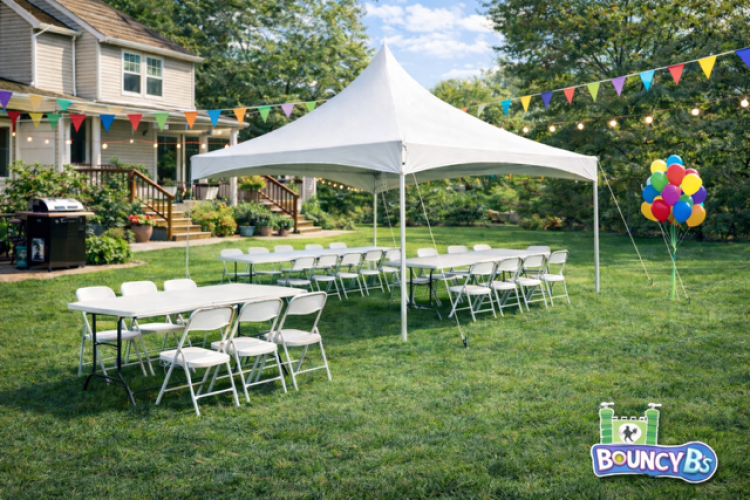
You’ve picked the perfect bounce house for your party. The rental company confirms availability. Then comes the question: “Where are you setting it up?”
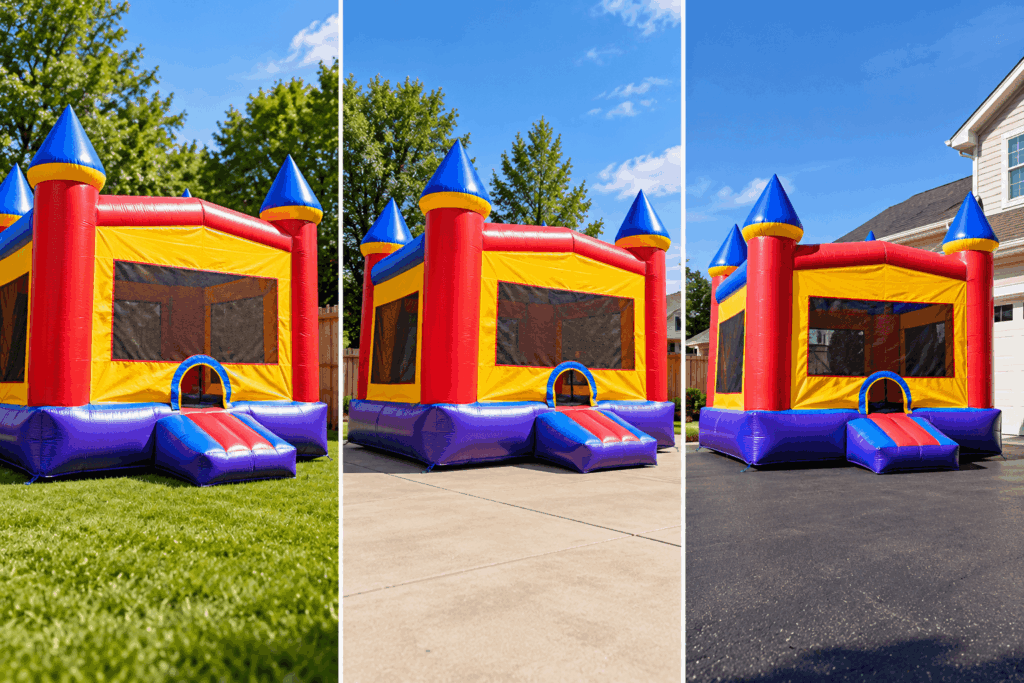
The surface you choose (grass, concrete, or driveway) affects how the unit is anchored, where it can be placed, and whether your setup will be approved at all. This guide explains exactly how bounce house setup works on different surfaces, what anchoring methods are used, and how to prepare your yard or driveway for a safe, smooth installation.
Table of Contents
Which Type of Setup Are You Planning?
🌱 Backyard Grass
You have a flat lawn, healthy grass, and space away from flower beds or sprinklers. You want the bounce house on a soft, cushioned surface.
Best for: Standard residential setups, backyards with ample clearance, natural anchoring with stakes.
🚗 Driveway or Patio
Your yard is limited, sloped, or not suitable for stakes. You have a clean concrete or asphalt driveway where the unit can sit level and be secured with weights.
Best for: Townhomes, small yards, hard surfaces near party zones, sandbag anchoring.
🏡 Mixed Surface Setup
The bounce house will sit partially on grass and partially on concrete, or you’re working with a patio edge or walkway transition.
Best for: Homes with multi-surface yards, patios with adjacent grass, hybrid anchoring setups.
Setting Up a Bounce House on Grass
Grass is the most common and preferred surface for bounce house rentals. It offers natural cushioning, allows for secure stake anchoring, and typically provides the flattest, safest setup area in residential yards.

How Bounce Houses Are Anchored on Grass
Professional rental companies use metal stakes (typically 18 to 24 inches long) driven through anchor loops at each corner of the bounce house. These stakes penetrate deep into the soil and hold the unit firmly in place, even during active use or light wind.
💡 Pro Tip: Avoid setting up over sprinkler heads, irrigation lines, or freshly aerated lawns. Stakes can damage underground systems or fail to secure properly in loose soil.
What Makes a Good Grass Setup Area
- Level ground: No slopes, dips, or hills (even slight grades affect stability)
- Healthy grass: Firm soil that holds stakes securely (not overly saturated or sandy)
- Clear of obstacles: No tree roots, rocks, sprinkler heads, or garden edging within the setup zone
- Sufficient clearance: At least 3 to 5 feet of open space on all sides for stakes, blower placement, and safe entry/exit
When Grass Setup Doesn’t Work
Some yards look great but aren’t suitable for staked setups. Common issues include:
🚩 Saturated or muddy ground
Stakes won’t hold in overly wet soil. Water also creates slip hazards around the unit.
🚩 Rocky or hard-packed soil
Stakes can’t penetrate dense clay or rock layers. Setup crews may not be able to secure the unit safely.
🚩 Steep slopes or uneven terrain
Even a 5-degree slope creates instability. Bounce houses must sit completely level.
🚩 Underground utilities or irrigation
Driving stakes near sprinkler lines, electrical conduits, or septic systems can cause costly damage.
If your grass area isn’t suitable, most rental companies can pivot to a hard surface setup using sandbags instead of stakes. For more details on planning your rental, visit our Bounce House Rental Guide.
Can You Set Up a Bounce House on Concrete or Asphalt?
Yes (bounce houses can absolutely be set up on concrete or asphalt), and in many cases it’s the only practical option. The key difference is the anchoring method: instead of stakes, rental companies use weighted sandbags to secure the unit.

How Sandbag Anchoring Works
Sandbags (typically 40 to 50 lbs each) are attached to the same anchor loops that would hold stakes on grass. Most standard bounce houses require 4 to 8 sandbags, depending on the unit’s size and the expected wind conditions.
The bags sit on the ground around the perimeter of the bounce house, creating downward pressure that counteracts lifting forces. When done correctly, sandbag anchoring is just as safe and secure as staking (but it requires more equipment and may come with an additional fee from the rental company).
⚠️ Important: Not all rental companies automatically include sandbags. If you’re setting up on concrete, confirm anchoring options when you book. Some companies charge $25 to $50 extra for sandbag anchoring.
What to Check Before Setup on Concrete
Hard surfaces work well for bounce houses, but not all concrete is created equal. Here’s what rental professionals look for:
✓ Level Surface
The concrete must be flat (no slopes, cracks, or uneven sections that could cause the bounce house to tilt).
✓ Clean and Smooth
Remove debris, oil stains, or standing water. Sharp edges or rough patches can wear on the inflatable’s base material.
✓ No Overhead Obstructions
Check for low-hanging tree branches, eaves, or power lines above the setup area.
One advantage of concrete setup: you don’t have to worry about damaging grass or underground utilities. The tradeoff is slightly less cushioning underfoot and the need for sandbag anchoring instead of stakes.
Bounce House Rental Driveway Setup
Driveways are one of the most popular hard-surface locations for bounce house rentals (especially for homes with limited yard space, sloped lawns, or parties where the driveway doubles as the main activity zone).

Why Driveways Work Well for Rentals
- Flat and stable: Most driveways are graded level and provide a firm, even base
- Close to the action: Often adjacent to the front or side yard where parties happen
- Easy access: Delivery crews can unload and set up quickly without navigating gates or narrow pathways
- No grass damage: If you have a pristine lawn or landscaping you want to protect, the driveway is a safe alternative
What You Need to Consider
Driveway setups are straightforward, but a few logistical factors come into play:
↓ Car Access
If you need your driveway for parking, plan accordingly. Most rentals last 4 to 6 hours, so vehicles may be blocked during the event.
↓ Blower Placement
The blower motor needs a grounded outlet within 50 to 75 feet. Driveways often require extension cords to reach the house or garage.
↑ Sun Exposure
Driveways in full sun can get hot. Concrete absorbs and radiates heat, especially in summer. Plan for shade or cooler setup times.
↑ Sandbag Anchoring Fee
Confirm whether sandbags are included or if there’s an extra charge for hard-surface anchoring.
If your driveway meets the basic requirements (level, clean, and large enough for the bounce house plus clearance), it’s a perfectly safe and practical setup location. For sizing guidance and space planning, check out our Obstacle Course Rentals Guide, which covers similar space considerations for larger inflatables.
What If My Yard Has Both Grass and Concrete?
Many homes have mixed surfaces (patios with adjacent lawns, driveways near grassy side yards, or walkways cutting through the backyard). If the bounce house will sit partially on grass and partially on concrete, professional rental companies use a combination anchoring approach: stakes on the grass side and sandbags on the hard surface.
_1778202222_big.webp)
How Hybrid Anchoring Works
The setup crew evaluates which anchor points fall on grass versus concrete. Corners on grass get stakes; corners on concrete get sandbags. The key is ensuring the unit sits level across the surface transition and that all anchor points (regardless of method) are equally secure.
💡 Pro Tip: Mention the mixed surface when you book. Rental companies prepare for hybrid setups by bringing both stakes and sandbags. Not all crews carry full anchoring kits by default.
The Main Concern: Level Placement
The biggest risk with mixed-surface setups is uneven height. If the grass is significantly higher or lower than the adjacent concrete, the bounce house may not inflate evenly or could tilt during use. Rental professionals assess this during delivery and may reposition the unit to avoid the transition zone entirely if the height difference is too pronounced.
If your yard has multiple surface types, communicate that upfront. Most companies will work with you to find the safest, flattest placement (even if it means adjusting the original plan).
How Much Space Do You Need for Bounce House Setup?
The bounce house itself has specific dimensions (but the total setup area is always larger). You need clearance on all sides for stakes or sandbags, blower placement, entrance access, and safe buffer zones away from fences, walls, or overhead obstacles.
General Space Guidelines by Bounce House Size
Unit Size: 13×13 to 15×15 feet
Total Space Needed: 18×18 to 20×20 feet
Includes 3 to 5 feet clearance on all sides for anchors and safe entry.
Unit Size: 15×20 to 18×30 feet
Total Space Needed: 20×25 to 22×35 feet
Longer units need extra front or rear clearance for slide exit zones and blower access.
Unit Size: 30×12 to 40×12 feet
Total Space Needed: 35×17 to 45×17 feet
Linear units require long, straight pathways. Check that fences or landscaping don’t block the run length.
Don’t Forget Vertical Clearance
Bounce houses range from 10 to 18 feet tall when fully inflated. Check for overhead obstacles like:
- Tree branches
- Power lines
- Roof eaves or awnings
- Pergolas or shade structures
A good rule of thumb: if you can’t comfortably stand and reach your arms up without touching anything above, it’s probably too tight for a bounce house.
For more on sizing and space planning (especially for larger inflatables), explore our 38ft Obstacle Course Rental page, which includes detailed setup diagrams.
Which Surface Is Best for Your Party?
There’s no universal “best” surface (it depends on your yard layout, the size of the bounce house, and what works logistically for your event). Here’s how to decide:

Choose Grass If…
- You have a flat, healthy lawn with firm soil
- There are no underground utilities or irrigation in the setup zone
- You want natural cushioning and traditional stake anchoring
- The party area is in the backyard and grass is the main surface
Choose Concrete or Driveway If…
- Your yard is sloped, uneven, or not suitable for stakes
- You want to protect landscaping or avoid grass damage
- The driveway or patio is the flattest, most accessible spot
- You’re hosting at a venue or location without grass (e.g., school parking lot, church courtyard)
Choose Mixed Surface If…
- The bounce house naturally straddles a patio edge or walkway
- You’ve confirmed the surfaces are level across the transition
- The rental company is prepared with both stakes and sandbags
- Repositioning the unit would create access or clearance issues
When in doubt, describe your setup area to the rental company before booking. Most companies will ask about your surface type during the reservation process and confirm feasibility before delivery day. If there’s any uncertainty, request a site visit or share photos of the intended location.
For more guidance on planning your rental (including delivery logistics and safety considerations), visit our Water Slide Rentals Guide, which covers similar setup principles for larger inflatables.
Frequently Asked Questions
Can you set up a bounce house on concrete or asphalt? +
Yes, bounce houses can be set up on concrete or asphalt using weighted sandbags instead of stakes. You’ll need 4 to 8 sandbags (40 to 50 lbs each) depending on the unit size. The surface must be clean, level, and free of cracks or uneven sections that could cause instability.
How do you anchor a bounce house on grass? +
On grass, bounce houses are anchored using metal stakes (typically 18 to 24 inches long) driven through anchor loops at each corner. The grass should be healthy and the soil firm (not saturated or sandy). Avoid areas with sprinkler heads, irrigation lines, or recently aerated ground.
Is a driveway or grass better for a bounce house setup? +
Grass is generally preferred because it provides natural cushioning and allows for stake anchoring. Driveways work well if you have the right weighted anchors and the surface is level and smooth. The best choice depends on your yard layout, available space, and surface condition.
What if my yard has both grass and concrete? +
If the bounce house spans multiple surfaces, rental companies use a combination of stakes (for grass sections) and sandbags (for hard surfaces). The key is ensuring all anchor points are secure and the unit sits level across the transition.
How much space do I need for bounce house setup? +
Most standard bounce houses need a flat area at least 18×18 feet, plus 3 to 5 feet of clearance on all sides for stakes, anchors, and the blower. Larger inflatables like combo units or obstacle courses may require 25×40 feet or more. Always check the specific dimensions for your rental.
Can you set up a bounce house on a hill or slope? +
No. Bounce houses must be set up on level ground for safety and stability. Even a slight slope can cause uneven inflation, tipping risks, and unsafe jumping conditions. If your yard has grades, choose the flattest section available.
Ready to Book Your Bounce House Rental?
Whether you’re setting up on grass, concrete, or a driveway, we bring the right equipment and expertise to make it safe, secure, and hassle-free. No pressure, no pitch (just helpful guidance and reliable service for your party).
Contact UsOr call (219) 688-9594 to discuss your setup and get a quote.